
What We Treat
Head and Neck Cancer Specialist Melbourne

About Head and Neck Cancer
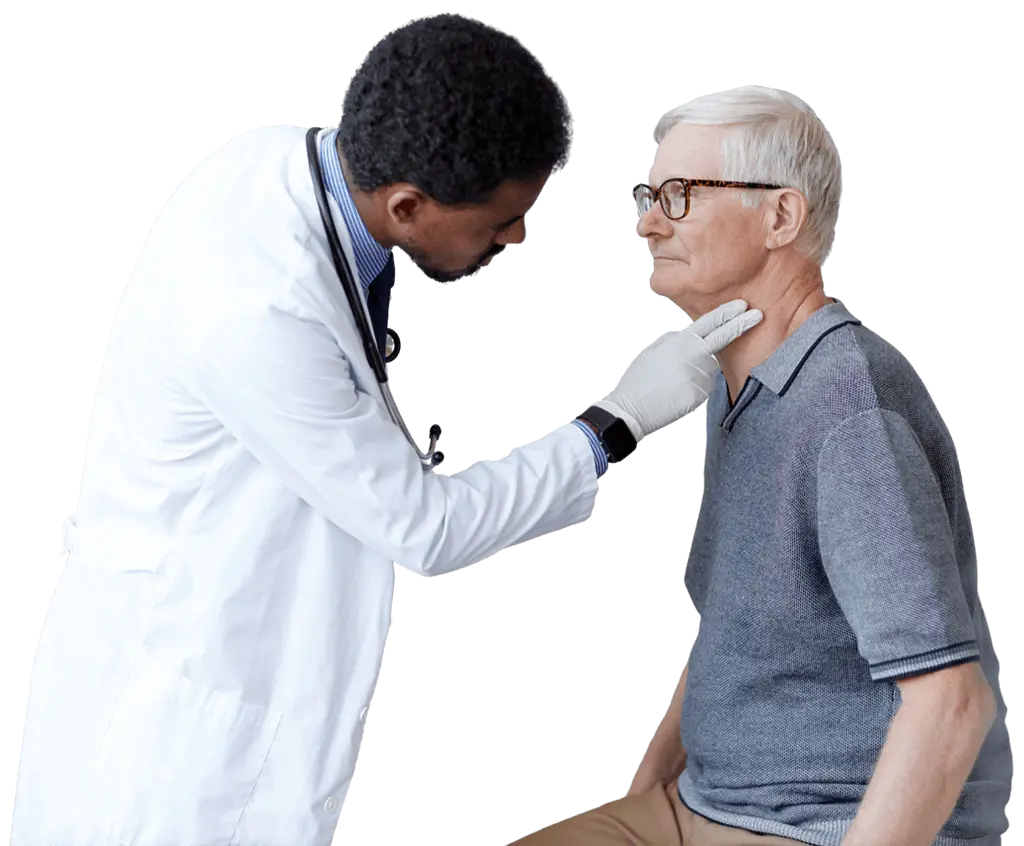
Head and neck cancers develop in the mouth, throat, voice box, sinuses or other parts of the head and neck region.
These areas are home to many delicate structures that are important for speaking, eating and breathing, highlighting the need for precise and accurate treatment methods.
Common types of head and neck cancer include:
- Oral Cancer develops in the mouth, and may affect tissue of the oral tongue, lips, gums, cheeks and the floor of the mouth. Symptoms can include persistent sores, a lump or swelling or patches in the mouth, and difficulty chewing, swallowing or speaking. Radiation therapy may be used as a primary treatment or alongside surgery and chemotherapy, depending on the type and stage of cancer.
- Pharyngeal Cancer is a form of throat cancer that can affect the nasopharynx (behind the nose), oropharynx (posterior of the tongue, tonsils and roof of the mouth), and hypopharynx (lower throat). Symptoms can include a sore throat, difficulty swallowing, or changes in voice. Radiation therapy is often considered for early-stage throat cancers or when surgery isn't possible.
- Laryngeal Cancer begins in the voice box which are essential for both speaking and breathing. It can lead to hoarseness, a persistent cough, or difficulty breathing. Radiation therapy may be used as a primary treatment, at various stages alongside surgery or chemotherapy or in palliative care.
- Nasal and Paranasal Sinus Cancer is a less common type of cancer that forms in the nasal cavity or the sinuses behind the nose. Symptoms may include a persistent blocked nose or sinuses, nosebleeds, a decreased sense of smell, or facial pain and pressure. Radiation therapy may be used alone in treatment of early-stage cancer, or before or after surgery.
- Salivary Gland Cancer is a rare type of cancer occurring in the salivary glands. It may cause swelling, numbness, or difficulty moving facial muscles. Radiation therapy is typically given after surgery to target any remaining cancer cells, or when surgery is not appropriate. It may also be used as a palliative treatment to help relieve symptoms of advanced cancer.
Radiation Therapy for Head and Neck Cancer Treatment
If you’ve been diagnosed with cancer in the head or neck, it’s natural to feel worried about how radiation may affect this sensitive area.
Radiation therapy is often an important part of your care, and with advanced techniques, can be delivered in a way that is carefully planned and targeted to your individual needs. Two key types of radiation therapy that may be considered in treatment of head and neck cancers are:
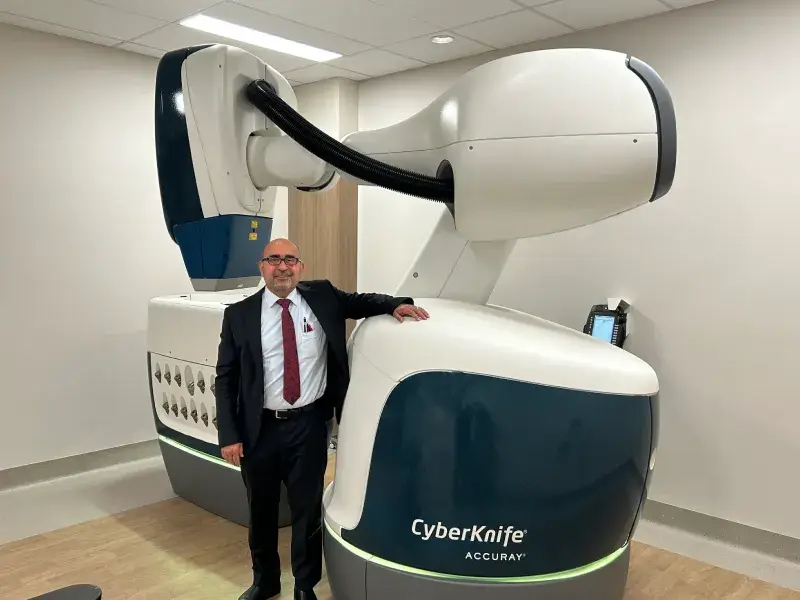

CyberKnife is an advanced type of stereotactic radiation therapy that uses computer guided robotics and real-time imaging. This allows precise radiation to be delivered from multiple angles and adjusted for natural movement such as breathing during treatment. CyberKnife may be suitable for tumours in complex or hard-to-reach areas, including the prostate, lung, liver, pancreas, head and neck.
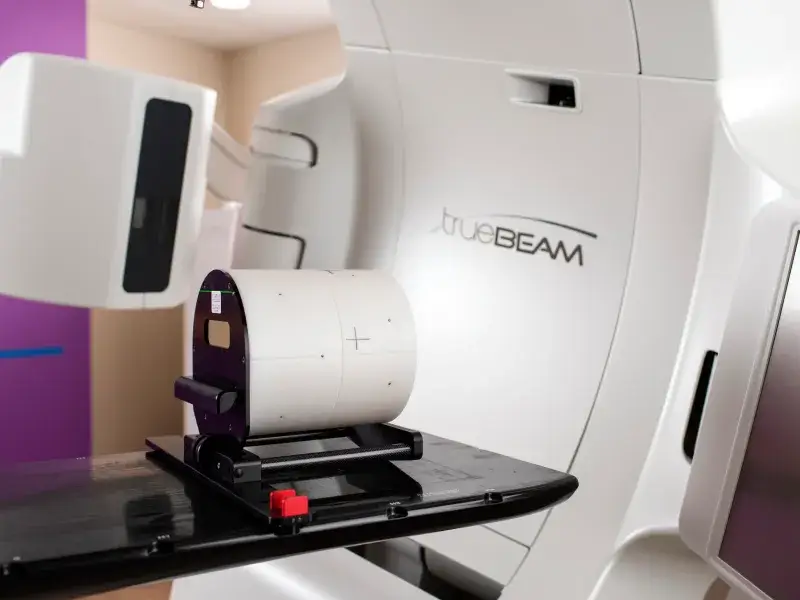

External Beam Radiation Therapy is one of the most common forms of radiation treatment. It uses a machine called a linear accelerator to direct beams of radiation from outside the body onto the cancer site. Up-to-date techniques such as Intensity-Modulated Radiation Therapy (IMRT) and Volumetric Modulated Arc Therapy (VMAT) allow the radiation dose to be shaped more precisely to the tumour, helping to protect surrounding healthy tissue. EBRT may be recommended for a wide range of cancers.
Your Treatment Journey
01
Referral
You will need a referral from your GP, surgeon or specialist to see Dr Mathlum. If you would like to access your treatment with us, you can ask your doctor to write a referral to our clinic and include any relevant scans or test results to assist with planning.
02
Initial Consultation and Treatment Plan
At your first appointment, Dr Mathlum will meet with you to review your medical history and test results and to explain the treatment options available. If radiation therapy is recommended, he will develop a personalised treatment plan for you.
03
Treatment
Radiation therapy is delivered over a series of sessions at one of our clinics. Each session is carefully guided and monitored by our team, who are always on hand to answer any questions and to help you feel as comfortable as possible throughout the process.
04
Post-Treatment Care
Your care continues after treatment with follow-up appointments to monitor your recovery and help you manage any side effects or concerns. Our team will stay in touch with you and your healthcare team to support your ongoing care.

Benefits of Radiation Therapy
- Precision targeting: Advanced imaging, planning and targeting allow for radiation to be accurately directed at the tumour, minimising the impact on surrounding tissue and structures.
- Advanced techniques: Methods such as IMRT, VMAT, and stereotactic systems like CyberKnife allow the radiation dose to be shaped to the tumour, even in irregular or complex areas.
- Improved patient experience: Unlike some older stereotactic systems, treatments such as CyberKnife do not require rigid frames for immobilisation, making the experience less restrictive.
- Outpatient treatment: Radiation therapy is delivered in scheduled sessions at our clinic locations with no hospital stay needed.
Your Head and Neck Cancer Treatment Questions Answered
Will radiation therapy affect my ability to speak or swallow?
How many sessions of radiation therapy will I need?
Can radiation therapy be used if I have already had surgery?
What side effects should I be aware of with head and neck radiation therapy?
What does radiation therapy cost?
Why Choose Us?
Precision Technology
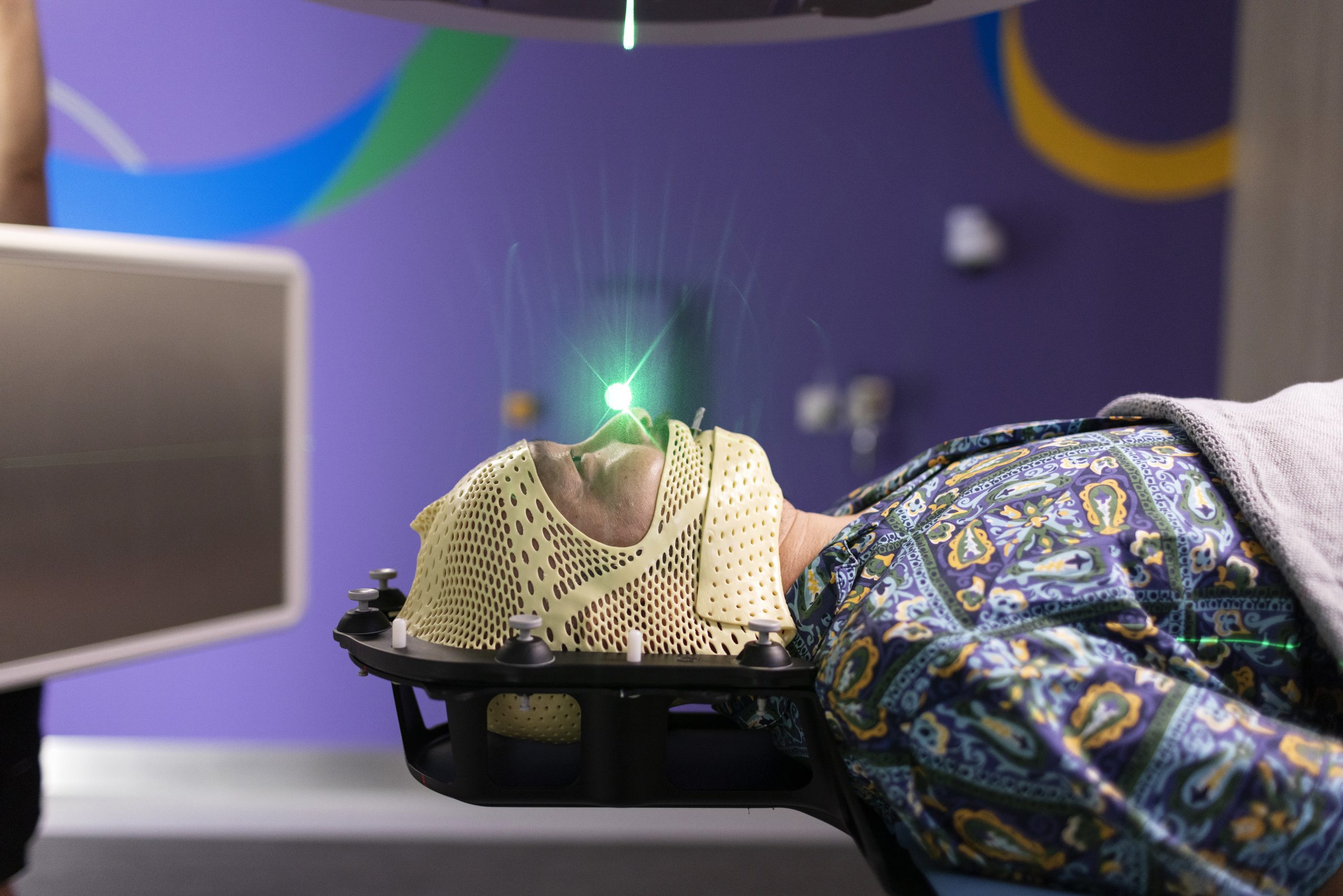
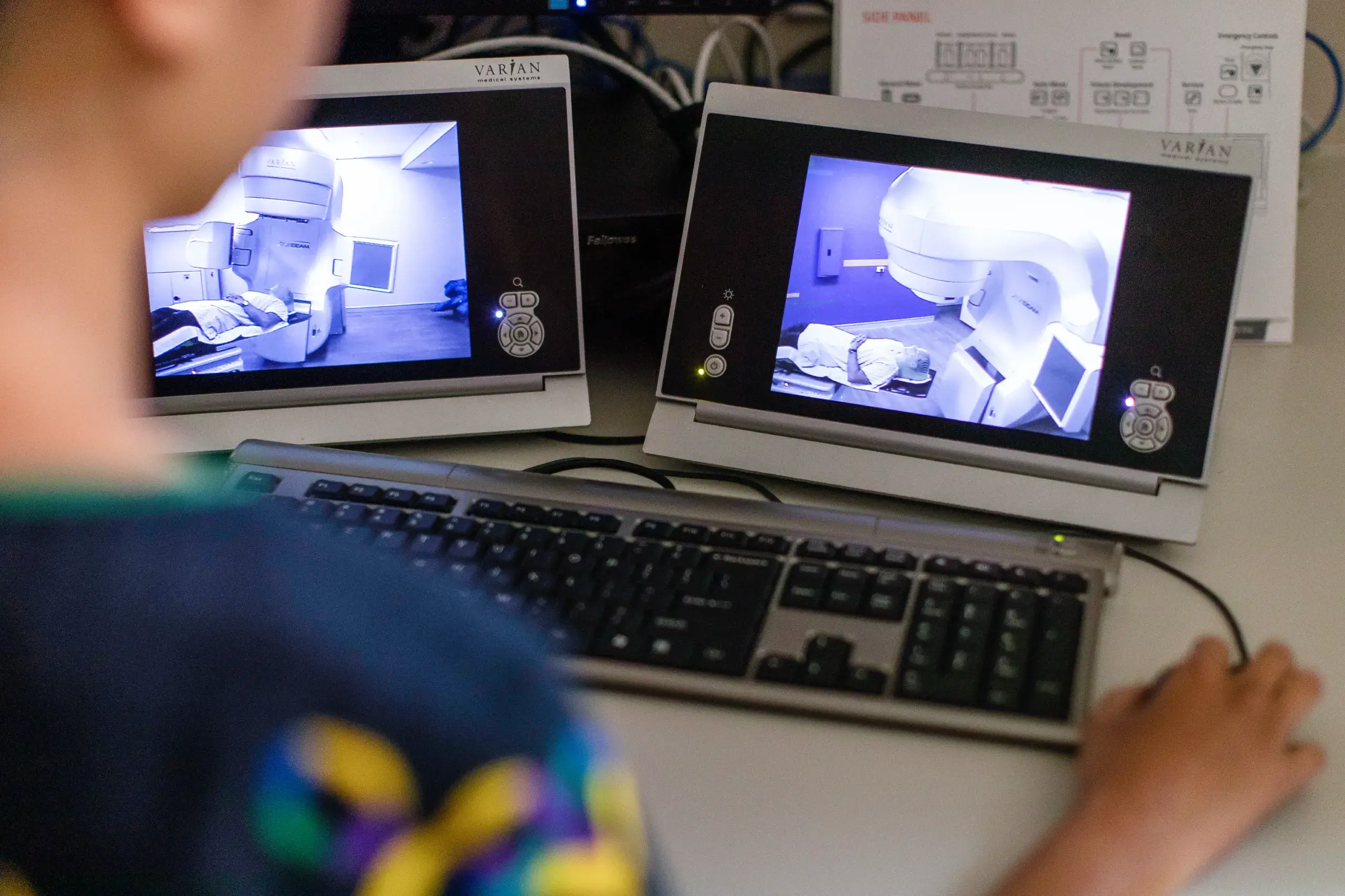
We use advanced planning and delivery techniques such as IMRT, VMAT and CyberKnife to deliver precisely targeted radiation, minimising exposure to surrounding healthy tissue.
Experienced Practitioners
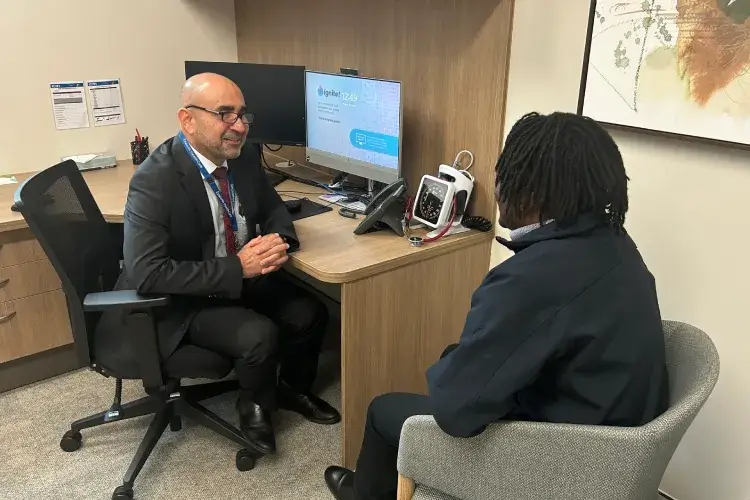
Your care is led by Dr Maitham Mathlum, a specialist radiation oncologist with 25 years of clinical experience. You will be supported by a skilled team, working together to support you through your treatment.
Collaborative Care
Every plan is tailored to the type and stage of cancer, as well as your overall health and individual circumstances. We work closely with your GP, specialists, and wider healthcare team to provide the best possible care.
Referrals from Practitioners
Radiation Oncologist
25 Years
Clinical Experience
Clinical Trials
Active Research
Training
Radiology Education

Support for Your Next Steps
At precision Radiotherapy Victoria, we’re committed to delivering tailored radiation therapy for head and neck cancer with a focus on precision and care. Our team understands the complexity of treating cancers in this area of the body and are dedicated to providing support and guidance throughout your treatment journey.
If radiation therapy has been recommended for you, speak with your GP or specialist about a referral to our clinic. You can also contact us directly to learn more about how we can support you.